Sep 2026 • Hack the Hill III, Civic Challenge
Where Does My Tax Money Go?
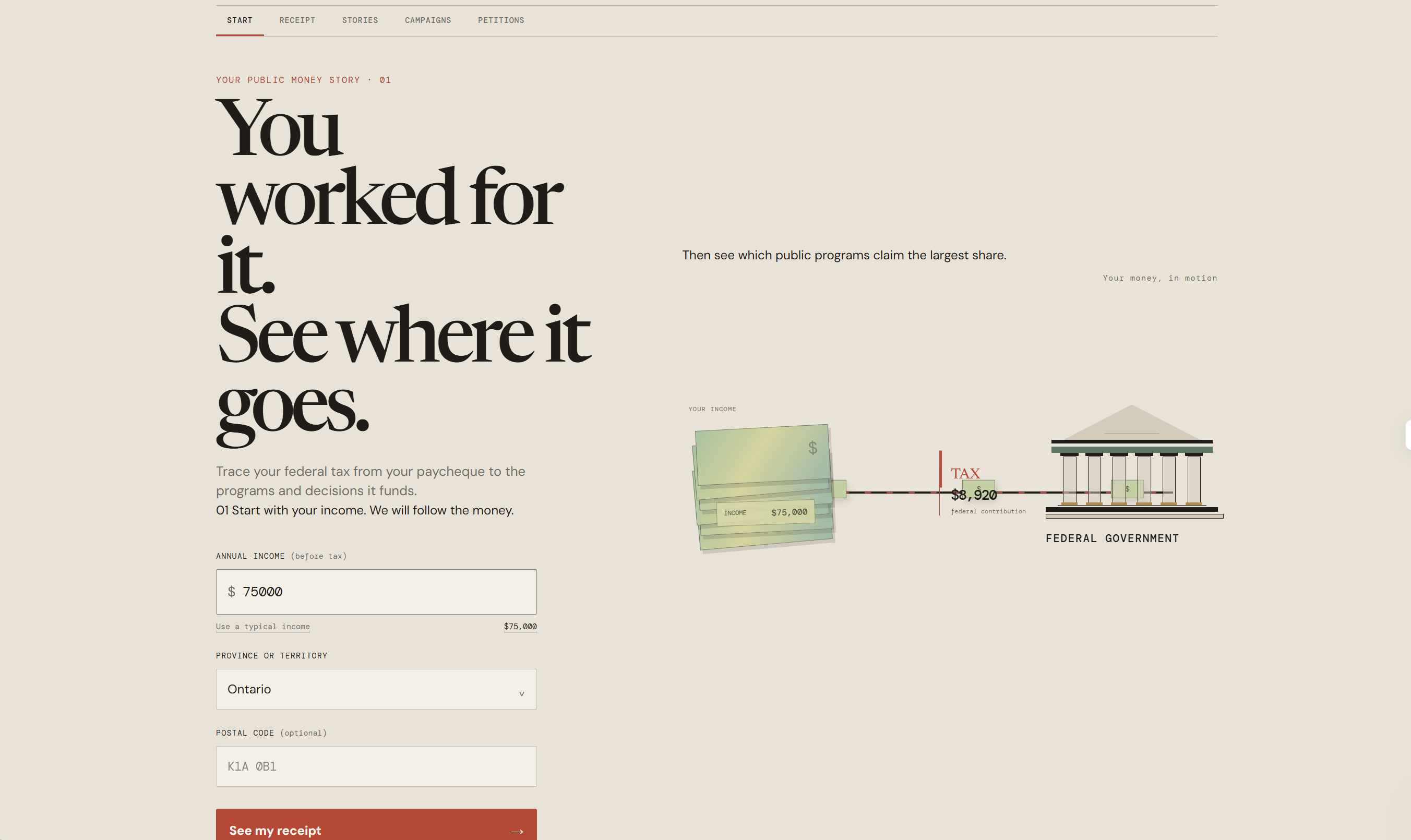
Every Canadian who works pays federal tax, yet almost nobody can say what their own money actually paid for. Spending reaches people in two ways: headlines about one scandal at a time, with no sense of scale, or budget documents written in billions and program codes most people can't use. People get angry for a week, then move on, because there is nothing obvious to do about it.
What It Makes Easy
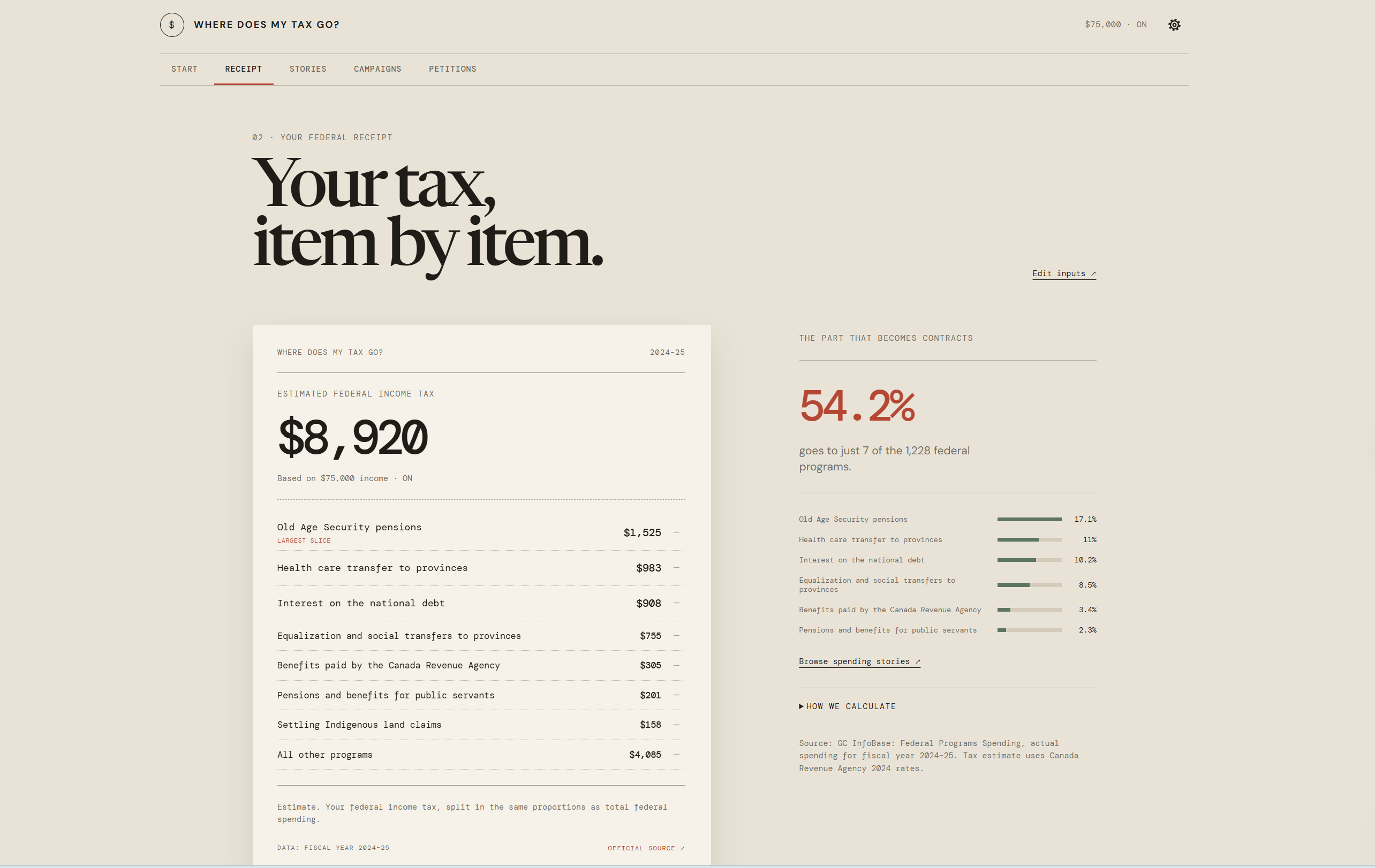
- Seeing your own money. Enter your income and province and you get a receipt, in your own dollars instead of billions: how much federal tax you paid and how much of it went to pensions, health care transfers, interest on the debt, and more. More than half goes to just 7 of the 1,228 federal programs.
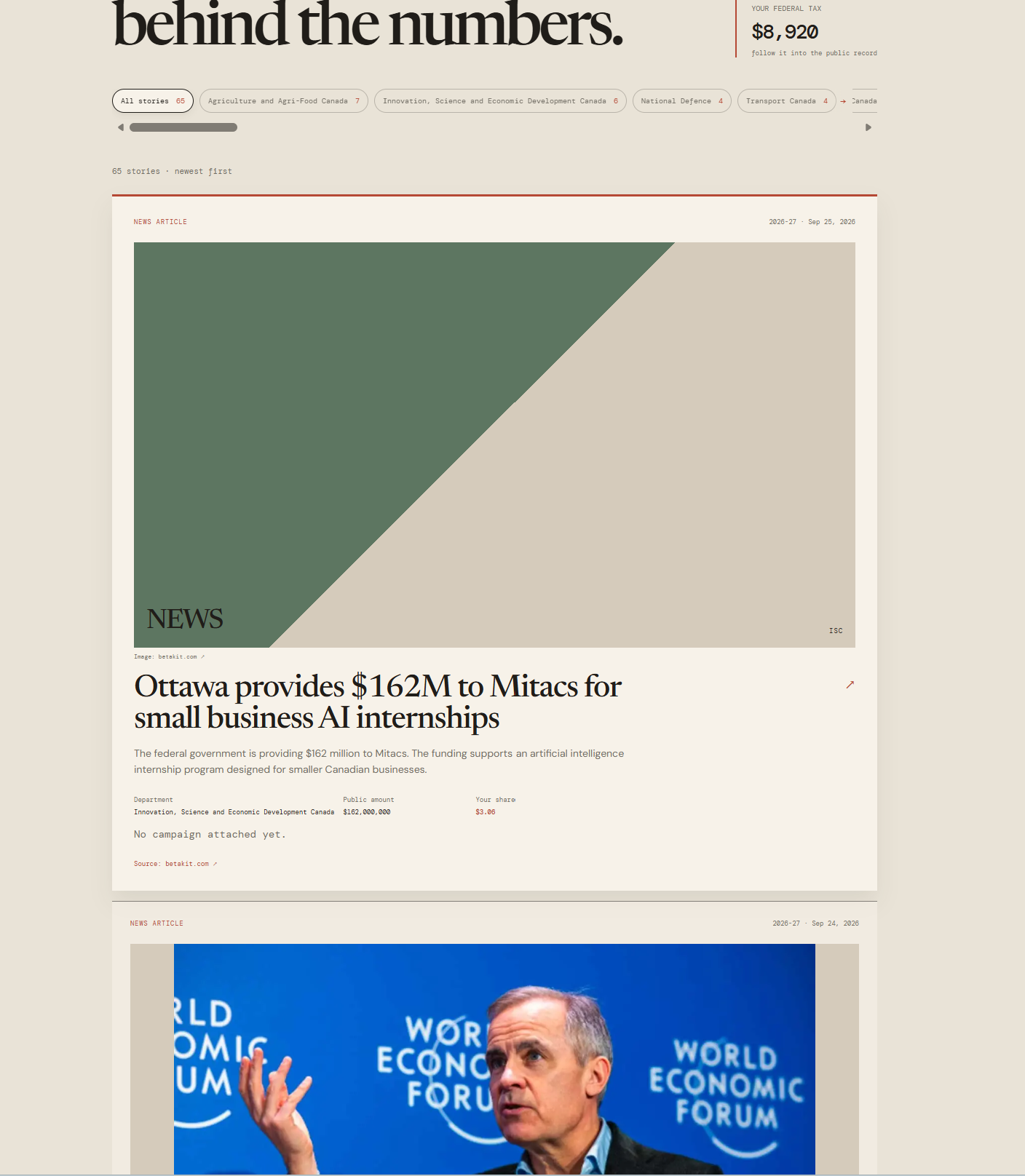
- Understanding the news in personal terms. Every spending story, from budget jumps in the public data to recent headlines, shows what it cost you personally. A $162 million program becomes about $3 out of your pocket, which makes it much easier to judge whether it was worth it.
- Turning an opinion into a voice. If a story matters to you, you can start or join a campaign on it. Once a campaign gathers enough supporters, the team asks an MP to sponsor it and opens an official House of Commons e-petition, where 500 signatures means the government has to answer in writing.
- Trusting what you see. The numbers come from the government's own open data, with sources shown, and your income is calculated on your device and never sent anywhere.
Target Audience: Who Is It For
Basically every Canadian. Anyone who earns an income pays federal tax, and anyone who reads a spending headline deserves to know what it means for them. The app needs no knowledge of how a federal budget works: an income and a province are enough to see where your money goes and to have a say in how it is spent.
My Role
We were a team of four at Hack the Hill III. I owned the data and backend: the tax calculator for every province and territory, the spending breakdown built from GC InfoBase open data, the APIs behind the receipt and the stories feed, and the campaign and petition backend, including reading live petition status from ourcommons.ca. The app was built with LLM assisted coding.
 Next.js
 TypeScript
 PostgreSQL
 Python